
It was a few years ago when I was first made aware of Plex. I had heard about it, but wasn’t interested in self-hosting. At the time, I was happily sharing passwords with family and friends and had access to essentially all streaming services. I paid for HBO Max, they paid for Netflix, etc. Once the password sharing crackdowns really began- and when my parents consolidated their streaming services- I became quite interested in Plex. Not only did I love the idea of self-hosting my own media (24/7 access with guaranteed no ads?!) but also I realized most streaming services have a horrible selection. At one point early in my transition to self-hosted media, I realized there wasn’t a single movie on Netflix from before 1979. At the moment of writing this (9/9/26), the oldest movie showing on Netflix is The Sting (1973). There’s just too many iconic and classic films that are always ignored by the mainstream streamers.
When I first began the Plex build, I didn’t plan it too much- I was just excited to get the server up and running. My first server was built on my Windows PC; I had the storage space and it was the only option I had at the moment. I’ve had a massive media collection essentially my entire life. Of course, it was originally physical media. My family and I love movies- we were the people with a literal DVD/VHS closet. Unfortunately, across many moves and various disruptions, that collection is completely gone. I imagine many people have similar stories. Fortunately, I still had random HDDs of content acquired over the years. But this digital media collection I had been building since 2009 was becoming more and more under-utilitized due to streaming’s convenience and dominance. But it finally got to a tipping point. The annual price increases, the tiered plans, the password sharing crackdowns- I was over it. The convenience was no longer worth it.
So I started the Plex server on my daily driver PC. It was fun, it was functional; I began to use it nightly. However, the way I set it up initially resulted in a Plex server that wasn’t 24/7 and had no remote access. And this is where my Linux journey begins. I went over to the fine folks at (Free Geek), checked their (eBay store), and found an old (Dell OptiPlex 7050 SFF). Of course, the storage it came with wasn’t nearly enough. So now I have to learn about HBA cards and SAS drives. With the help of random Reddit posts, some Gemini queries, and tons of various forums from 2010 to now, I was able to migrate my existing Plex server from my main PC to a dedicated 24/7 OptiPlex running Mint. Through that process, I became unafraid of the CLI. And I learned Linux- especially Mint- is extremely noob friendly.
I’m definitely a noob. I don’t have many commands memorized, but I’m now far more comfortable opening the terminal, navigating between directories, editing .env and .yaml (with some assistance), and deploying docker containers. I have always wanted a reason to use the terminal and now I’m becoming quite comfortable with it- and actually starting to understand things too!
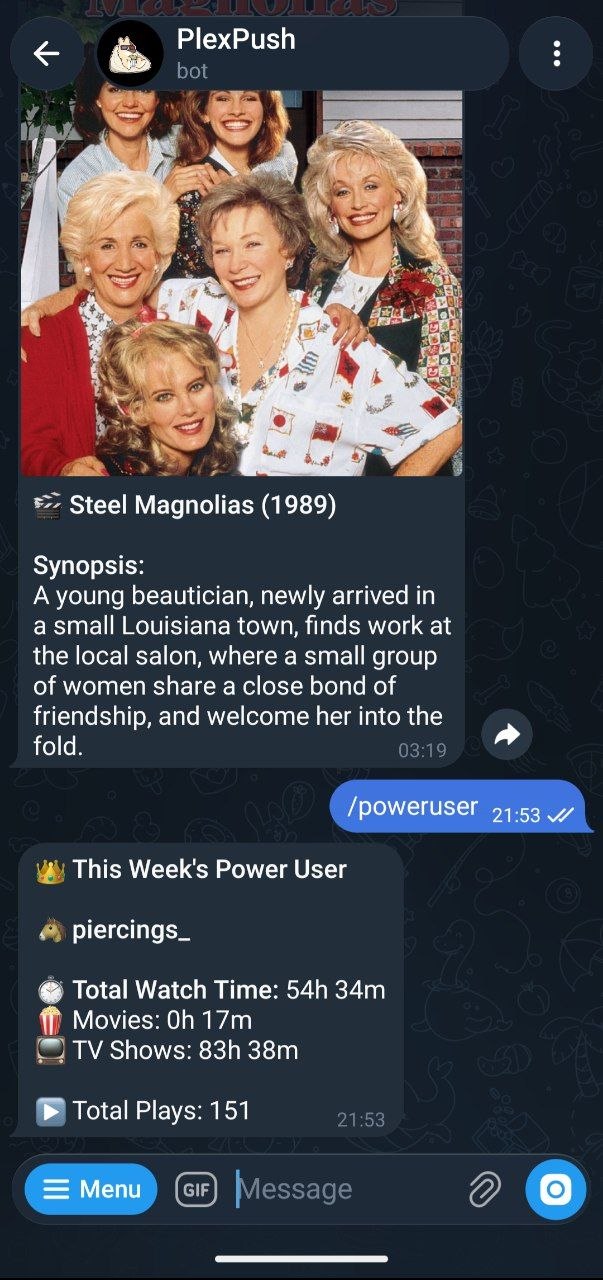
A small project spawned from the Plex server is a Telegram bot that messages me when new media is added to the server. PlexPush. I also added a few other fun features (that need some work still e.g. the “power user” stats are incorrect).
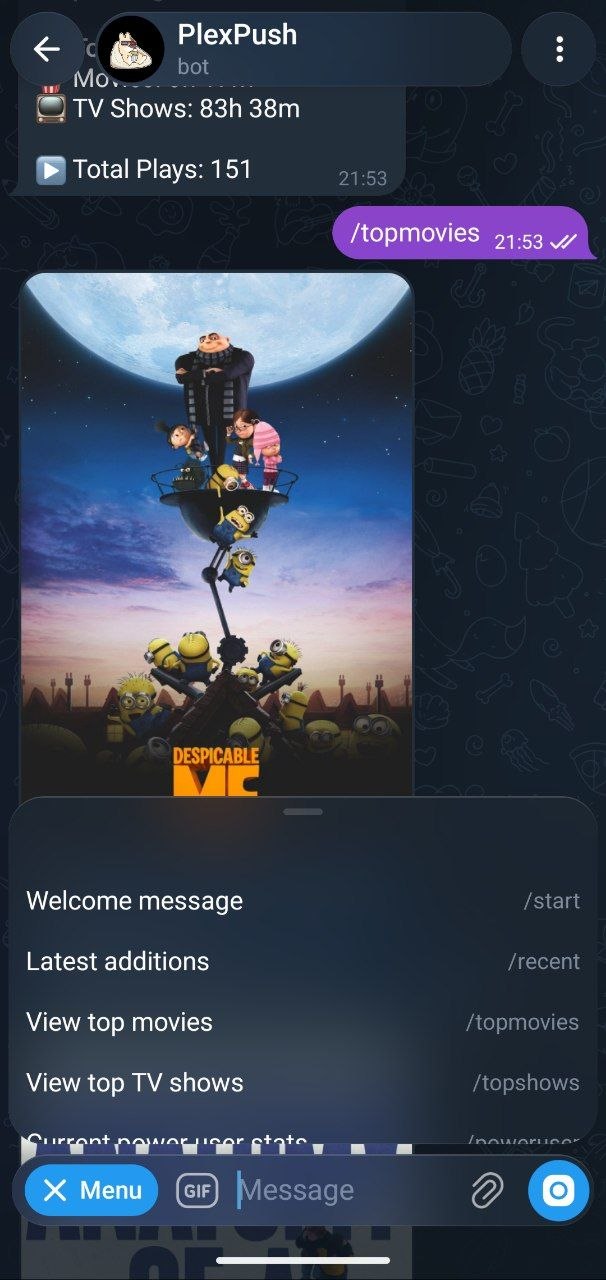
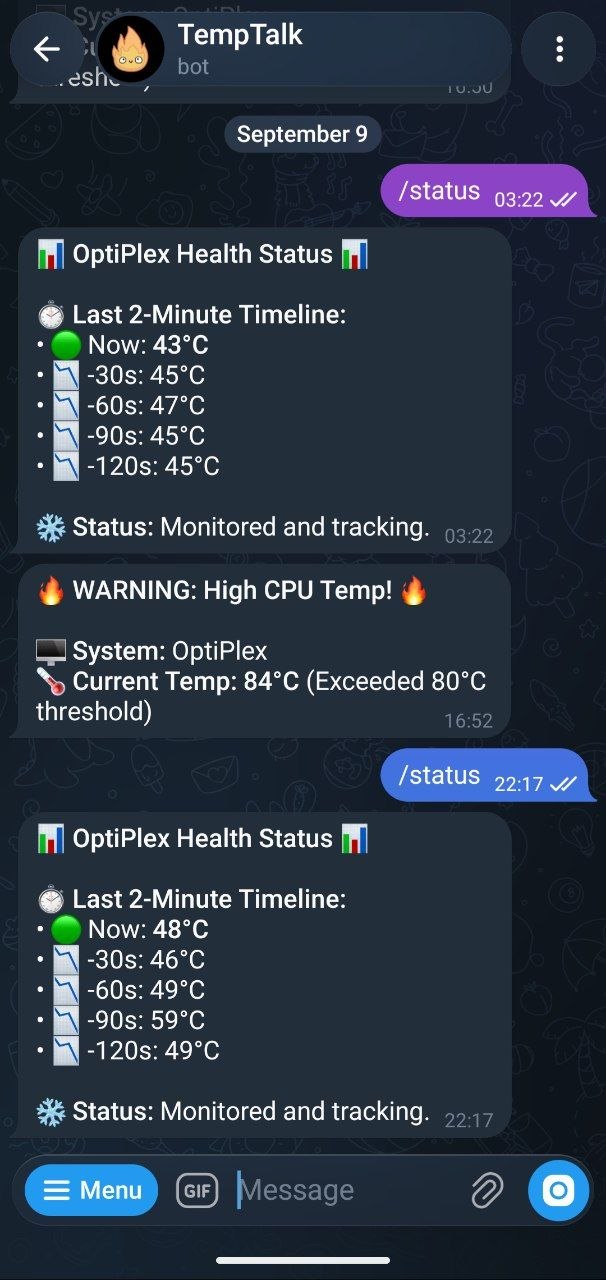
Working on the Plex server, I noticed the old OptiPlex often throttling the CPU and the fans hitting 100% quite often. I wanted to be able to keep an eye on it even when I wasn’t at home so I also made the TempTalk bot. It messages me on Telegram when the OptiPlex CPU exceeds 80c.
I’d like to briefly mention TorBox (← referral link) - this wonderful site opened up a new world for me. Cloud torrenting is immensely handy. Even the free tier is quite useful. Basically cloud torrenting downloads and seeds torrents on remote cloud servers (so you do not need a local torrent client). TorBox also has other fun stuff (that I don’t really use): Instant Streaming (streams cached files), Usenet & hosters, Stremio, Plex, and Jellyfin integration. My favorite part of TorBox, though, is that no VPN is needed. The site masks your personal IP address because the actual downloading happens on their servers (you’re not downloading a torrent from The Pirate Bay- you’re downloading a cached file from a TorBox server). Not a paid ad, I just really love TorBox lol.

So now I have the beginnings of a “homelab” - I even set up Pi-Hole on the OptiPlex (mostly as an experiment- perhaps soon I’ll get an actual Raspberry Pi). Hardware I want to get next:
- TP-LINK Archer C7 AC1750 (to put my smart tv on its own network and trap it from scanning network devices/an experiment- I mean- you saw that Gamers Nexus LG investigation, right?!).
- More RAM for the OptiPlex (16GB (2x8GB) DDR4-2400 Non-ECC).
None of that hardware is currently needed, but I am looking forward to getting it to continue network strengthening and media experimentation. A NIC port would be fun to get as well- I’m curious if it will help with Plex server speeds, particularly when there are multiple streams.
I’m not totally comfortable with Linux the way I am with Windows. However, if Ableton were released as a native Linux app, I’d start planning on making my Windows PC into a Linux machine ASAP. There are many reasons why - and if you’re here, those reasons are probably relevant to you. If you’re considering switching to Linux, or wanting to start playing with Docker- now is such a good time. Two years ago, I never thought I would have a website, multiple Docker containers, Telegram bots, comfortability with Linux/CLI, and some Cloudflare experience. And for a lot of that I have Claude and Gemini to thank. Honestly, I try to have a nuanced stance on AI. It is a bit like veganism to me. By it being like veganism, I mean I understand the arguments (I was once vegan for about a year) but also understand why we eat meat. Being vegan shouldn’t be a countercultural thing- it should be the norm. And being anti-AI shouldn’t be countercultural- it should be the norm. Like participating in modern factory farming by purchasing super market ground beef- using AI is a moral dilemma. The possible consequences and social ramifications are nothing short of terrifying. It is seemingly an environmental disaster multiplier. But a few questions and sessions with Claude Code turned my confusion and hesitation to create Docker containers into confidence and curiosity. It’s pretty freaky.
I didn’t use AI to write this- I find creation fun. I love writing, I love making music, I love researching. Of course, folks are gonna think I did use AI to write this just because I use it to help with building sites and containers (vibecoding 100%). But I must admit- after having spent the last few years completely avoiding using ChatGPT, Gemini, Claude, Grok, etc- I am thoroughly enjoying the ability to ask an AI agent to review my work or assist with a technical dilemma.
It has undoubtedly sped up my production while allowing me to learn about many IT subjects along the way. Things I have been long interested in and passionate about. Because of Claude/Codex/Gemini, I’m learning how to use Github, how to use Cloudflare, and how to finally build and deploy ideas I have had for over a decade. And I’ve been able to do all this while maintaining my normal work schedule (at a job that is completely unrelated to this hobby). It’s also making me realize I am adept at resolving many home networking issues, I love building/setting up PCs.. and I just may want to attempt a career change.